Summary
Terrascope's Reduce module helps enterprises plan emission cuts before they spend money on them. Teams build "what-if" simulations across their value chain, compare the expected impact of each option by scope, business unit or geography, then turn the chosen simulation into an initiative and track its progress on shared dashboards.
Published 3 July 2023. This is a product announcement from that date.
What is Terrascope's Reduce module?
The Reduce module is the part of the Terrascope platform that helps enterprises plan, compare and track emission reductions.
Enterprises play a crucial role in decarbonisation and need practical support to do it well. Many already use Terrascope for the first step: measuring their greenhouse gas emissions accurately. To help them build initiatives that target their own hotspots, we have launched a set of features in our Reduce module. They help teams manage emission reductions, make informed decisions and set a clear path towards net zero.
| Feature | What it does | Why it matters |
| What-if simulations | Model changes to procurement, production or logistics | See the emissions effect before committing |
| Compare | Put simulations side by side | Pick the option with the biggest reduction |
| Initiatives | Turn a chosen simulation into a tracked plan | Monitor progress and keep owners accountable |
How do what-if simulations work?
You adjust factors across your value chain and see how each change would affect your emissions.
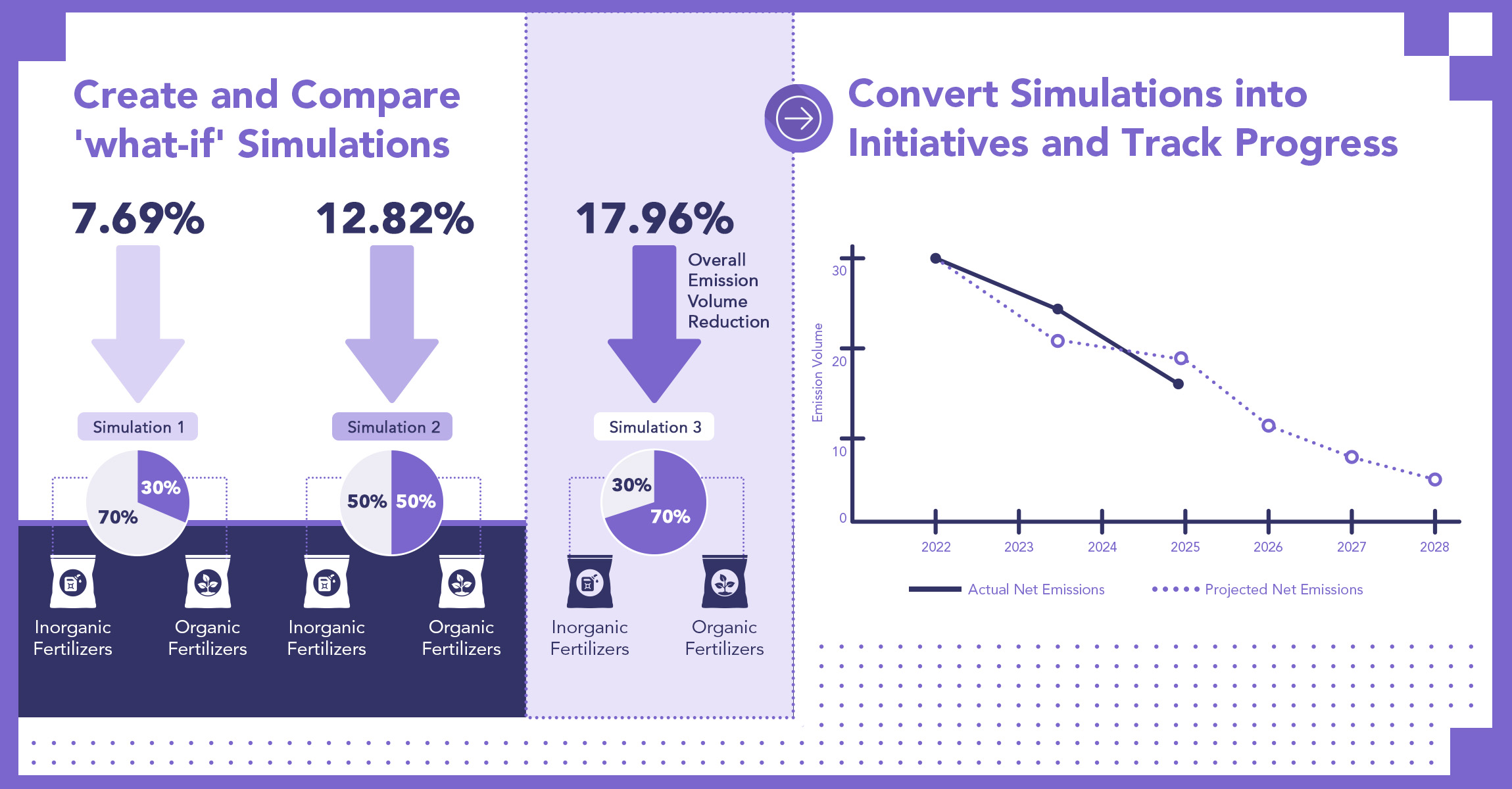
Enterprises can create multiple simulations by adjusting factors across their value chain, then compare the potential impact of each on emissions. This lets businesses explore different procurement options and production methods, test strategies, and quantify the impact by scope, business unit or geography. By modelling the consequences of different decisions, enterprises can choose the options that cut the most emissions with the least disruption to their operations.
How do you compare reduction scenarios?
The Reduce module puts simulations side by side so you can see which one delivers the largest reduction.
By analysing the outcomes of different simulations, businesses can identify the most effective strategies and build more accurate forecasts. Decision-makers can then develop action plans and allocate resources where they will cut the most emissions.
How do simulations become tracked initiatives?
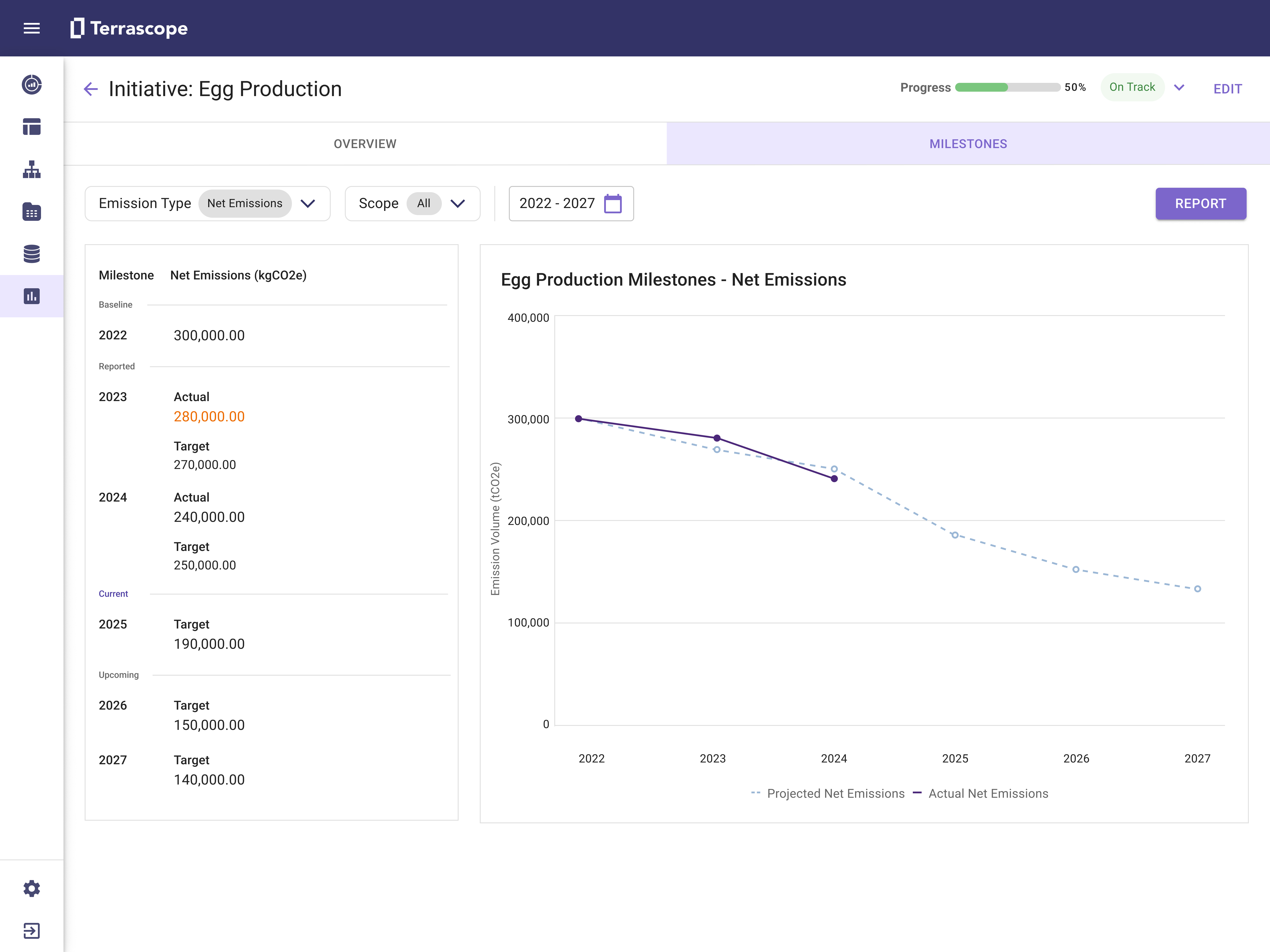
Once you choose a simulation, you can convert it into an initiative and track progress against it over time.
This step creates a structured action plan. Businesses can monitor and measure the effect of their efforts, keep owners accountable and adjust their plans as needed.
How does it improve decision-making?
It makes reduction plans more accurate, faster to build and easier to share.
Accuracy
Companies often know their biggest emission sources, such as a supplier, a raw material or a shipping route, and have a good idea of the levers that could cut them. What they find hard is quantifying how much each lever would reduce emissions.
The Reduce module quantifies the expected impact of specific plans. Enterprises can identify their biggest hotspots, such as shipping routes or groups of suppliers, and evaluate the effect of their actions on those areas.
Speed
Evaluating the impact of decarbonisation levers across a value chain is slow and complicated. Sustainability teams often spend a lot of time on it.
Simulations on the platform show the impact of each lever, so companies can allocate resources, especially people, efficiently and prioritise the initiatives that give the biggest reductions.
Collaboration
The Reduce module supports both top-down and bottom-up ownership of carbon goals. As simulations become initiatives, they can be monitored on the platform. Teams on the ground get the emissions dashboards that matter to them, and can work with colleagues and external partners on data gathering, reduction initiatives and progress tracking.
Through what-if simulations, comparisons, initiative tracking and impact quantification, the Reduce module gives large enterprises the tools to plan and manage their emission reductions and act with confidence on the way to net zero.
Where this stands now
Reduction planning now sits within Terrascope's AI-powered decarbonisation solution, alongside features such as 1-Click Decarbonisation. For how targets and reduction plans fit together, see our guide to the SBTi Corporate Net-Zero Standard V2. Frutura used Terrascope to build an SBTi-ready FY2024 baseline, the starting point for any reduction plan. Our science-based targets workshop covers the same ground for your company.
To discuss your reduction plan, contact our team.