Drafted by AI from your own documents and the carbon data already in your Terrascope platform.
Dozens of jurisdictions are adopting the new global baseline for climate reporting: ASRS in Australia. UK SDS. SSBJ in Japan. CUE in Mexico. All built on IFRS S2.
“The platform is intuitive, easy to navigate, and grounded in strong sustainability expertise, supporting our reporting requirements and decarbonisation efforts."
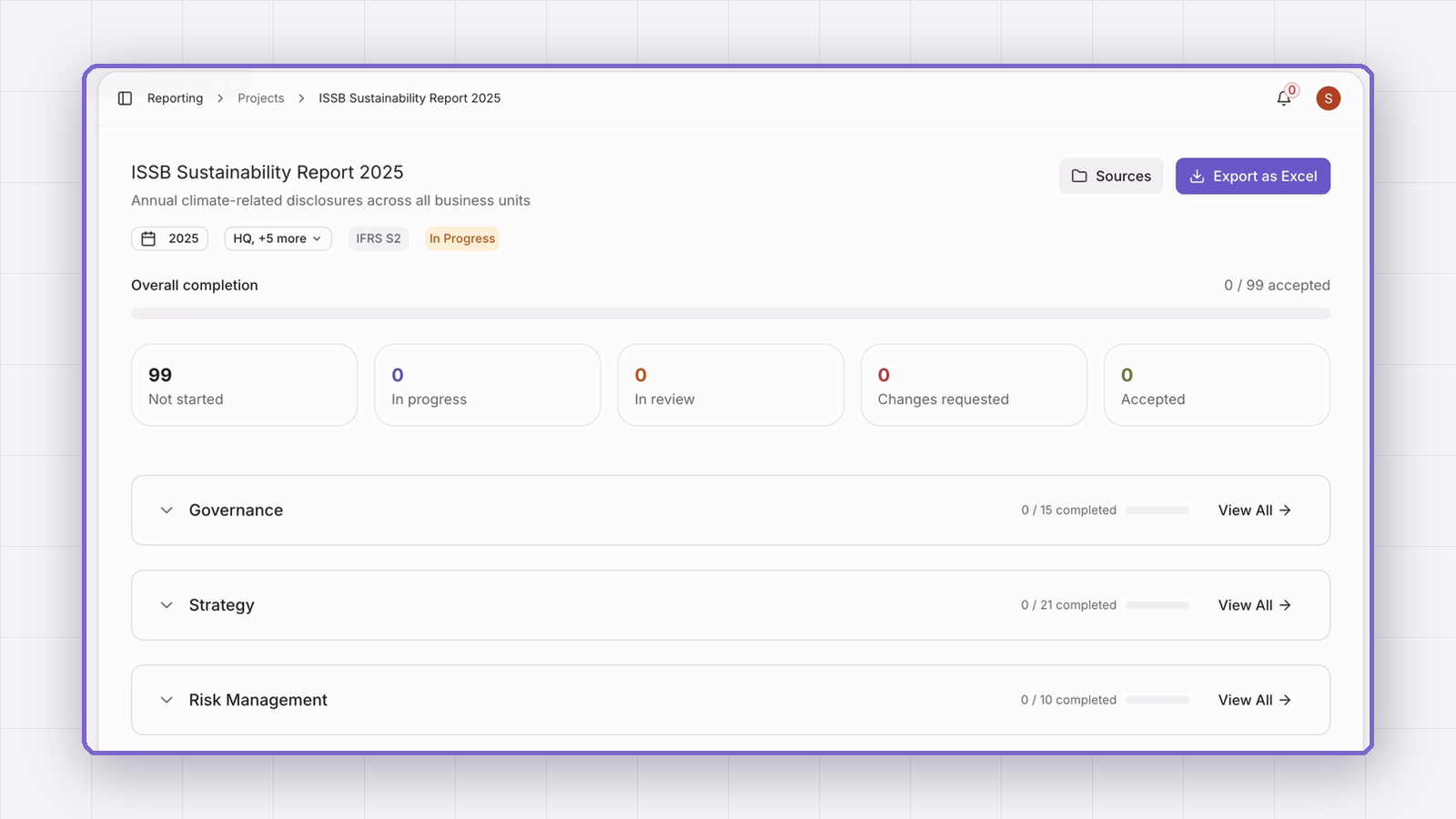
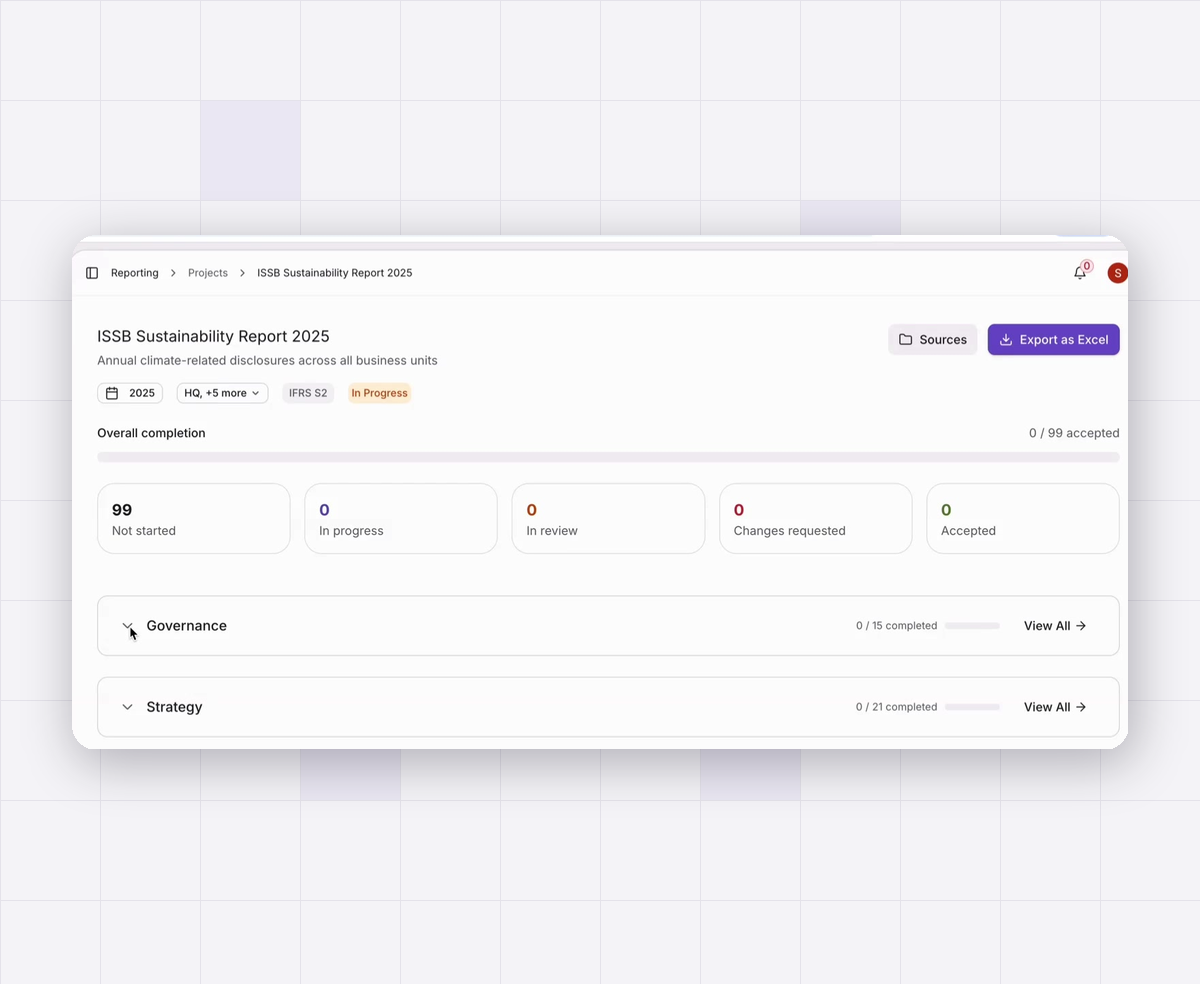
Terrascope replicates the full standard. IFRS S2 has 86 disclosure requirements across four standard categories: Governance, Strategy, Risk Management, and Metrics & Targets, plus the additional sector-specific disclosures tied to industry classifications.
Pick the right sector once, and the platform pulls the right additional disclosures into your project automatically. Define your reporting boundary at group or entity level and the disclosure scope follows.
AI-drafted responses, grounded in your own documents
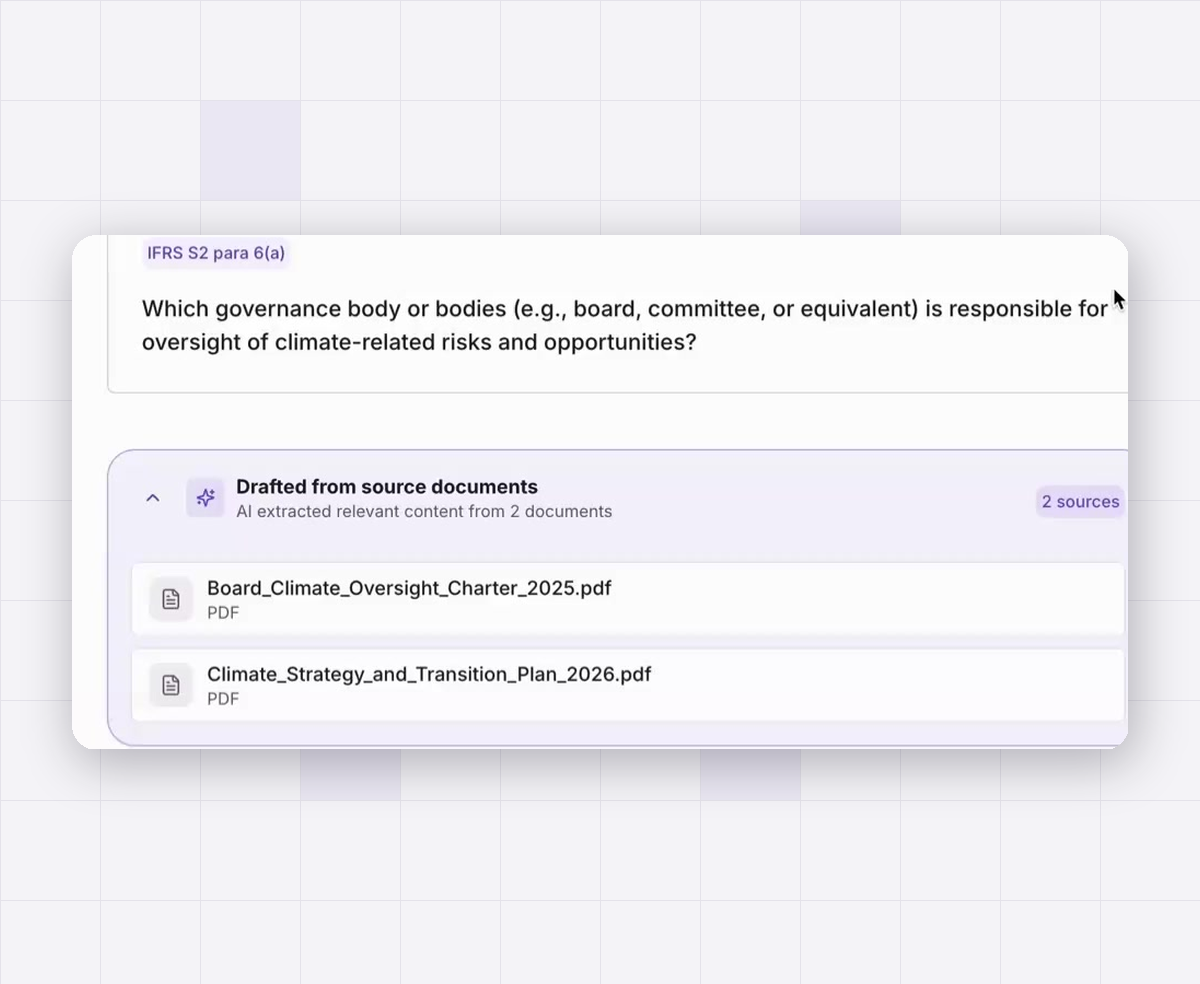
Upload your governance documents, board charters, transition plans, policies, last year’s report, or board minutes. Then use those documents to draft disclosures for an entire category, or one at a time. The AI uses only the documents you’ve uploaded, so every draft is grounded in your team’s existing language and decisions.
Each AI-drafted response cites the documents it pulled from, so your team can cross-check before they refine.
Role-based review, with the audit trail built in from day one
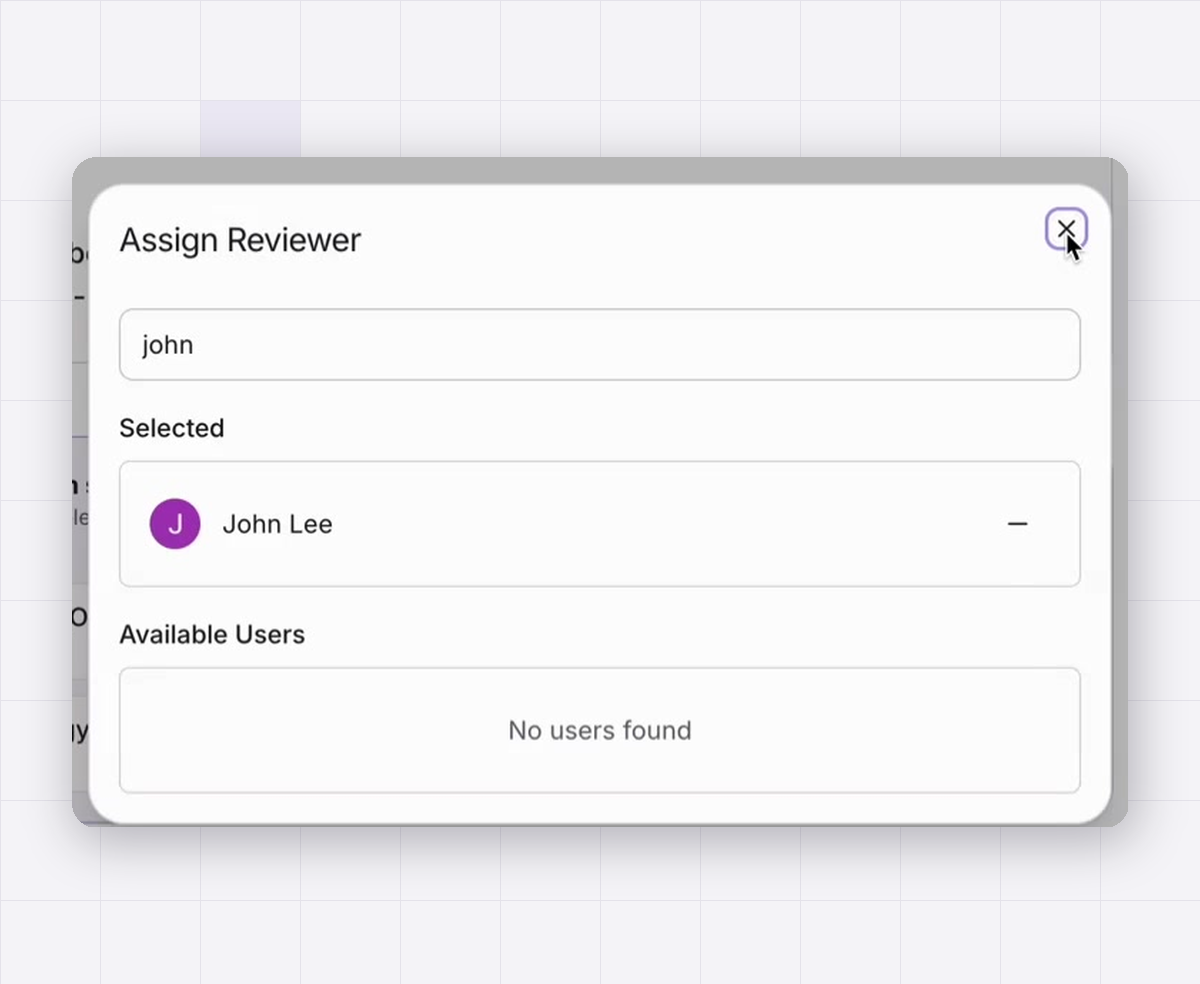
Each disclosure routes through three roles: an editor refines the AI draft, a reviewer checks it, and the carbon manager signs it off. Role-based access controls what each user sees: a non-manager doesn’t see the disclosure list until they’re explicitly assigned to it.
Requests for changes are made in-platform, with comments threaded against the specific disclosure they refer to. No reviewer email chains. No tracked-changes Word docs going back and forth.
Exported audit-ready
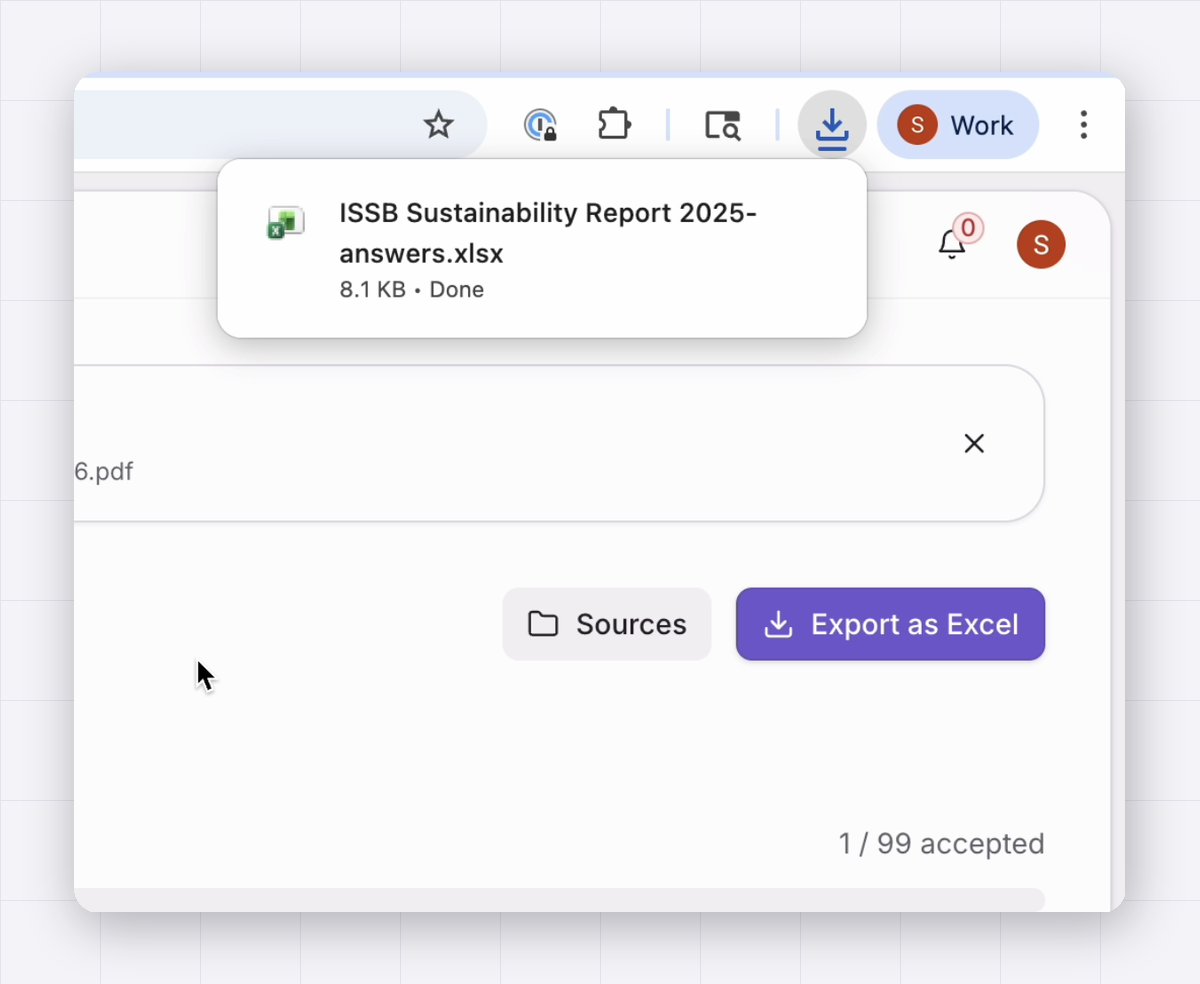
When you’re ready to design your sustainability report or for external assurance, export the disclosure pack to Excel, choosing every question or only the accepted answers.
Each row contains the IFRS S2 paragraph reference, the disclosure description, the editors, the reviewer, the carbon manager, and the latest approved response. Quantitative metrics (Scope 1, 2 & 3) pulls directly from the carbon data already in your Terrascope platform. One file. Audit-ready. Report ready.
Mexico's securities regulator requires IFRS S1 and S2 sustainability reporting from listed companies, starting with 2025. Scope, dates,...
Frequently Asked Questions
What is IFRS S2?
IFRS S2 is the climate-related disclosure standard issued by the International Sustainability Standards Board (ISSB). It sets out 86 disclosures mapped across four standard categories (Governance, Strategy, Risk Management, Metrics & Targets), plus additional sector-specific disclosures. Twenty-one jurisdictions have adopted IFRS S2 on a voluntary or mandatory basis as of January 2026. Read our blog here.
What is ASRS reporting?
ASRS stands for the Australian Sustainability Reporting Standards, issued by the Australian Accounting Standards Board (AASB). ASRS is built on IFRS S2, with limited Australian-specific modifications. Group 1 entities (the largest companies) are required to report from FY2025; Groups 2 and 3 phase in through 2027 and 2028.
How does ASRS S2 differ from IFRS S2?
ASRS S2 is the Australian endorsement of IFRS S2. The disclosure structure is the same: 86 disclosures across the four standard categories. AASB has made limited modifications for Australian-specific context, including transitional reliefs in the first year of reporting and not mandating the sector-specific disclosures.
When is the ASRS reporting deadline?
Group 1 entities must report from financial years beginning 1 January 2025. The first reports are due in 2026, with limited assurance required from year one. Group 2 entities follow from 1 July 2026, and Group 3 from 1 July 2027.
What software supports IFRS S2 reporting?
Several climate platforms support IFRS S2 reporting. The differentiators are how the AI drafts the qualitative disclosures, how directly the reporting module connects to the underlying carbon measurement data, and how the audit trail traces every disclosure value back to source. Terrascope’s reporting module is built around the full IFRS S2 standard and draws from the audit-trailed measurement data already in the platform and the user-controlled upload documents.
Can AI draft a climate disclosure?
AI handles the mechanical 80% of the disclosure: pulling quantitative values into the right fields, restating governance language from existing documents, and carrying forward targets and variances. Human reviewers handle materiality calls, narrative judgement, and climate scenario interpretation. Role-based workflows assign each disclosure section to the right reviewer.
How does Terrascope's AI work, and what happens to the reports we upload?
Terrascope extracts the text from your uploaded documents and stores it in the same database as the rest of your data, no separate store for customers.
When a user triggers AI drafting, the platform retrieves the paragraphs most relevant to the requirement and drafts a response from them.
The AI models are enterprise-grade, accessed through AWS Bedrock. Your data is never used to train these models, and the providers don't retain it long-term.
How long does it take to produce an IFRS S2-aligned report?
The cycle compresses materially when the data layer and the disclosure layer are on the same platform. Customer experience varies by organisation size and disclosure complexity. The starting point is your data being audit-trailed and current. From there, AI-drafted disclosures and role-based review reduce the manual draft, review, and validation work that historically took months.
How does Terrascope handle limited assurance?
Auditors receive viewer seats inside the platform. They see the full emission factor library, audit logs, verification workflows, and lineage from disclosure value to activity data. The reporting process is the audit trail.
Does Terrascope’s reporting module work without the full carbon accounting platform?
Yes. The reporting module can be sold standalone. For organisations that have measurement data in another system, the disclosure layer runs on its own, with data imported from your existing source.
Ready to see a reporting cycle of weeks, not months?