Scope 3 Supplier Engagement that builds your commercial case.
Industry estimates are generally fine for disclosures. But your customers and investors expect carbon differentiation.
Start with your few suppliers driving the lion's share of Scope 3 emissions, collect primary data at scale, and build the commercial case where estimates fall short.
See how to run data campaigns across
hundreds of suppliers
Why collect primary data from suppliers?
Scope 3 totals built on industry averages get you a number you can disclose.
But averages treat every supplier the same: a supplier who has invested in low-emission practices looks identical to one who has not. You cannot differentiate, track real reductions year-on-year, or back up product-level claims using industry averages.
For product or service differentiation, you need primary supplier data tied to your low carbon value proposition.
Prioritise Suppliers by Emissions Impact
Effective supplier engagement begins with prioritization, so start by identifying the key suppliers driving your Scope 3 footprint. Slice your Scope 3 emissions data by category, region, or spend to find the hotspots that matter. Your first data campaign targets the suppliers where better data makes the biggest commercial difference. Then scale data collection volume directly through the platform.
Collect Corporate or Product Carbon Footprints
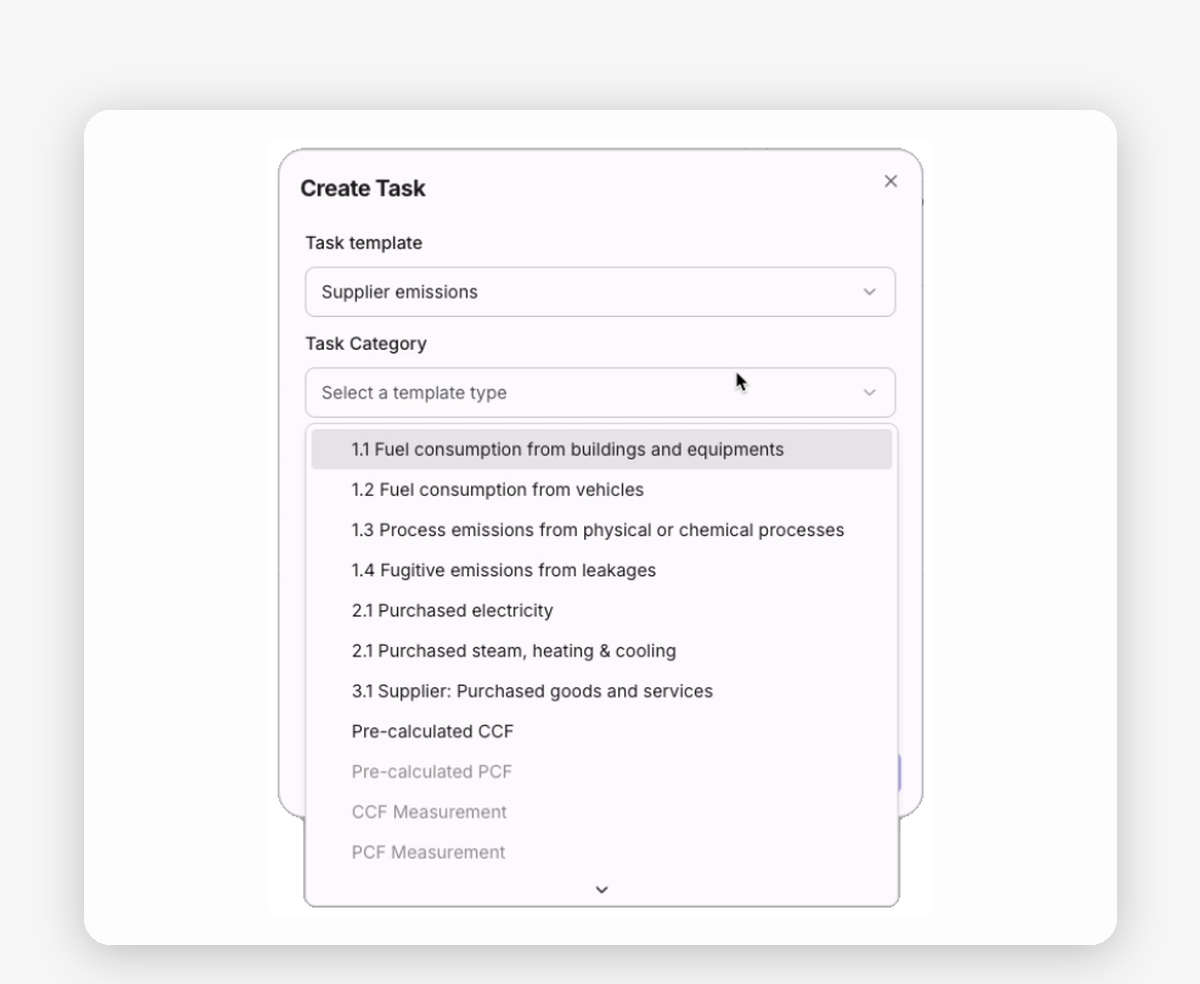
Collect pre-calculated corporate carbon footprint (CCF) or product carbon footprint (PCF) values from your suppliers. When a supplier provides corporate footprints, ingest their Scope 1, 2, and relevant Scope 3 numbers along with an allocation ratio that ties their footprint to your account. For suppliers with life cycle assessments, collect product results directly. The data is converted into a supplier-specific or product-specific emission factor for your Scope 3 measurement.
Guide Suppliers Through Easy Workflows
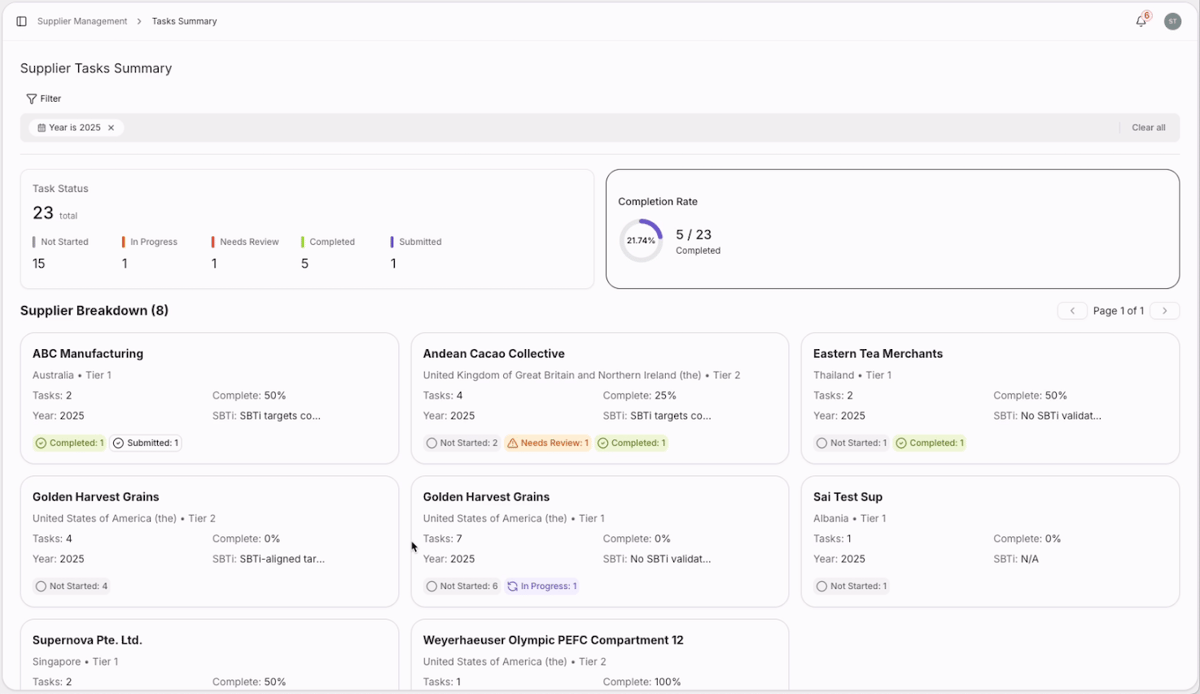
Configure collection fields, mark them mandatory or optional, and run structured campaigns tailored to different supplier industries. One campaign for packaging suppliers, another for logistics, a third for raw materials. Each with the right questions for the right context.
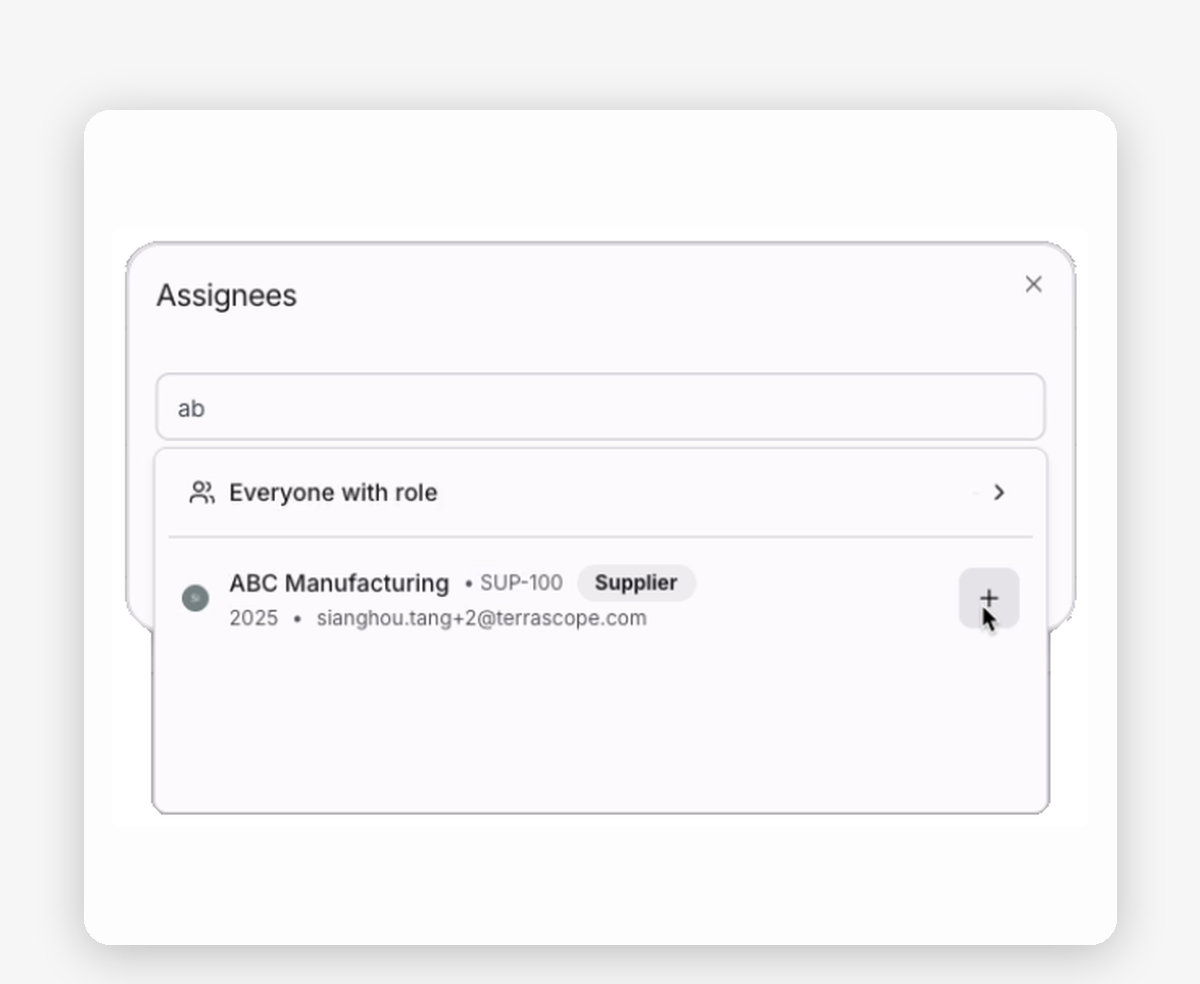
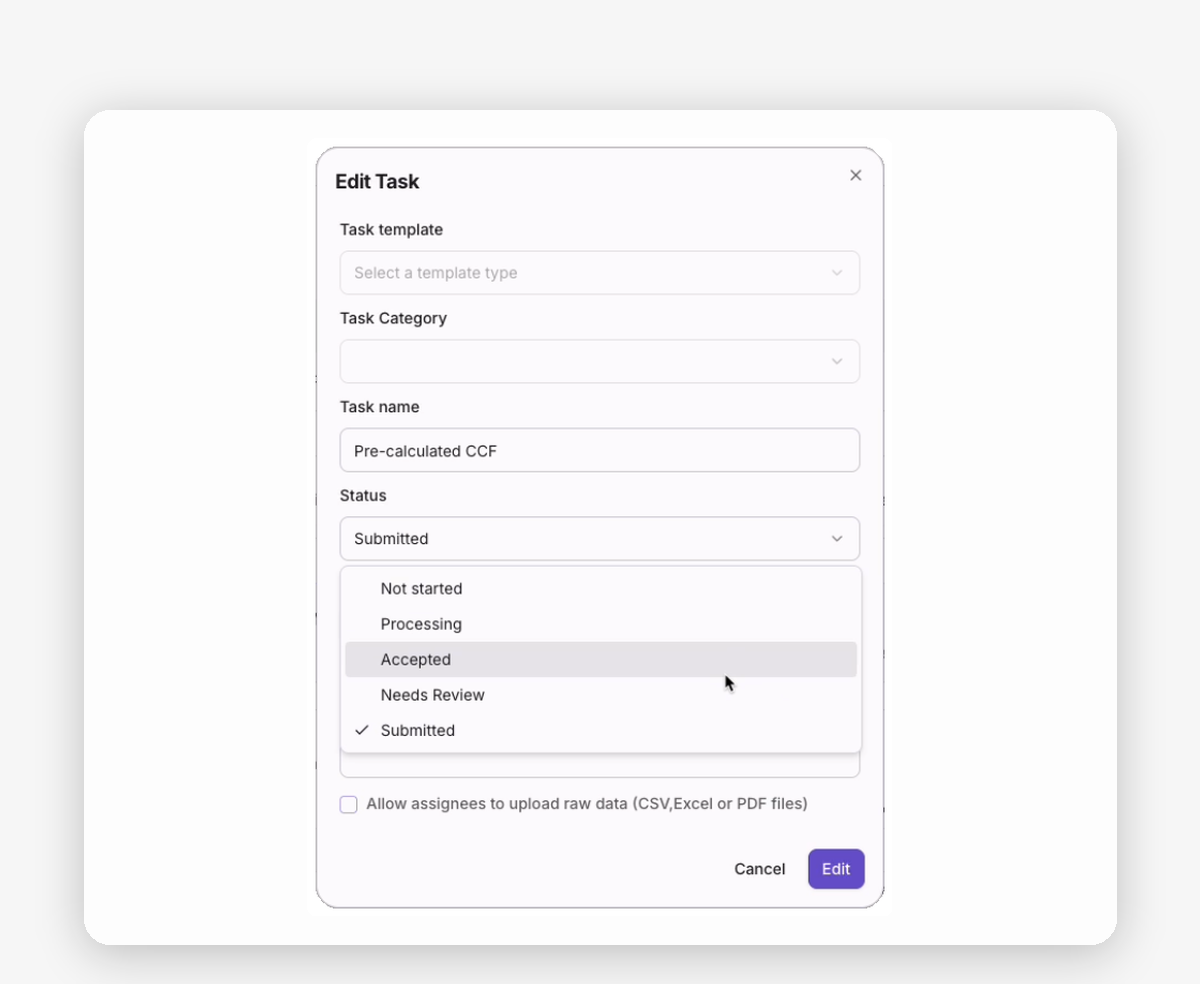
Suppliers receive a step-by-step visual workflow to submit data in the format you need. Onboarding guidance, progress tracking, and task timelines reduce friction and increase response rates. Your team monitors progress from a single dashboard.
Automate Data Validation and Visualisation
Every supplier submission runs through validation checks that flag missing values, outliers, and inconsistencies before the data reaches your footprint. When auditors ask where a number came from, the answer traces back to the supplier submission, the validation check, and the emission factor applied.
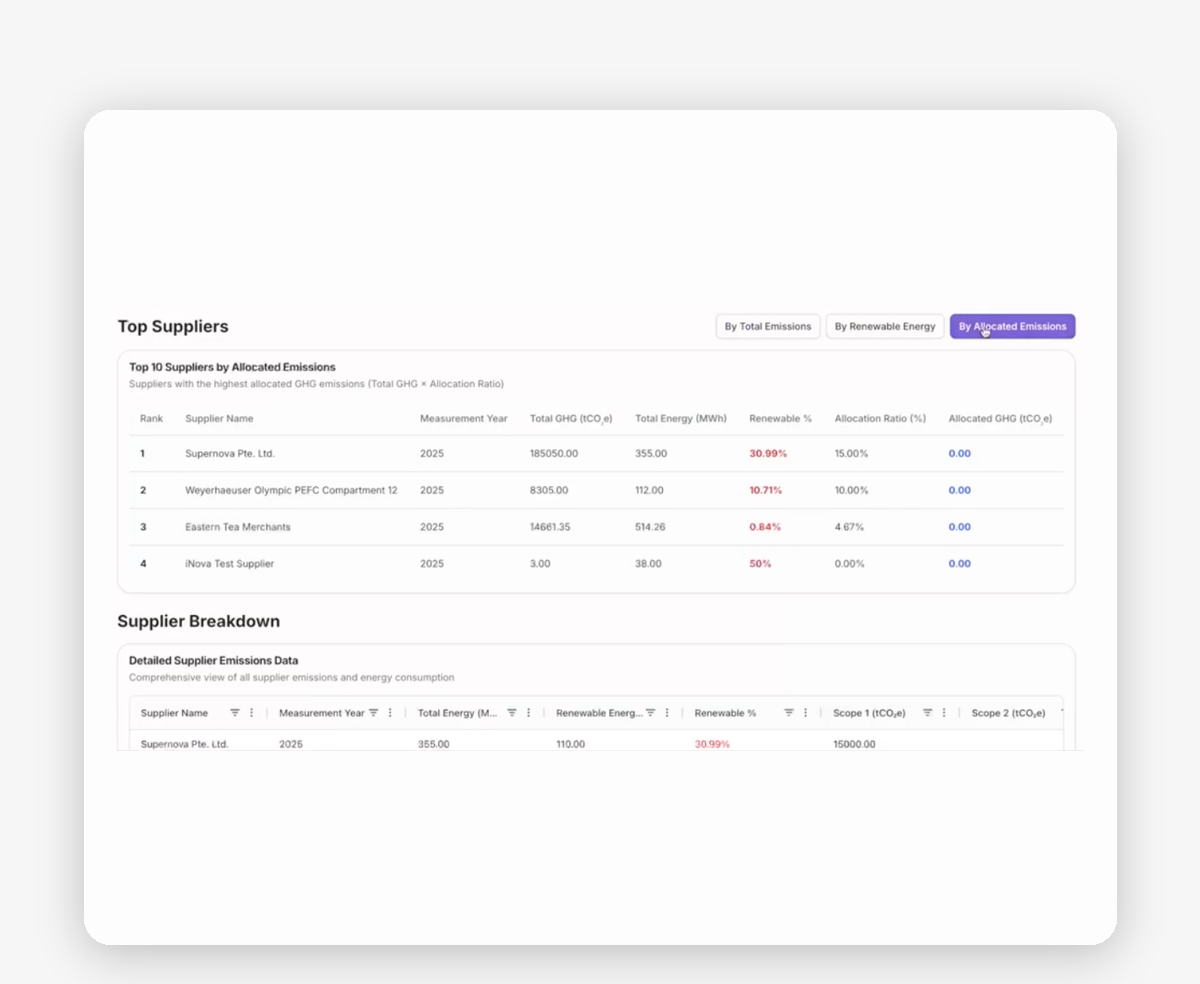
Once supplier data is flowing in, it populates a set of supplier-specific dashboards inside Terrascope. You can drill into any single supplier or rank the full set by attributed emissions or other filters.
Blog
Terrascope Achieves WBCSD PACT Conformance: Enabling Scope 3 Supply Chain Carbon Transparency
Terrascope achieves WBCSD PACT conformance, enhancing Scope 3 carbon transparency and interoperability across global supply chains.From Intent to Impact: 3 Steps to Kickstart Your Supplier Engagement Journey
To start, the most effective climate strategies start not with dashboards — but with the right objectives, suppliers, and engagement...Financing the Regenerative Transition: Best Practices and Leveraging Scope 3 Data
Unsure how to build a business case for shifting to low-carbon, regenerative agriculture? Stay tuned on this space.Frequently Asked Questions
Do regulations require primary data from suppliers?
No. Disclosure frameworks, including IFRS S2, accept spend-based estimates and industry averages for Scope 3 reporting. They do not mandate supplier-specific data. IFRS S2 explicitly allows companies to use "reasonable and supportable information available ... without undue cost or effort".
So why do companies collect primary data from suppliers? The commercial case is different. Procurement risk creates a clear need for primary data specifically when (1) the requirement is at product or SKU level, (2) the buyer explicitly demands supplier-reported actuals, or (3) to compete in a low-carbon premium tier.
Companies collect primary supplier data because the commercial incentives have moved ahead of the regulatory floor.

How do we collect emissions data from suppliers at scale?
Use a supplier engagement platform with structured data campaigns. Terrascope lets you segment suppliers by emissions impact, send tailored collection campaigns with industry-specific templates, and track responses from a single dashboard. Suppliers follow guided workflows to submit data in the right format, reducing back-and-forth.
How do I prioritise which suppliers to engage first?
Terrascope's segmentation tools let you slice your supply chain by emissions impact, data gaps, category, or region, so your first campaign targets the suppliers where better data makes the biggest difference to your footprint accuracy and commercial position.
Other criteria to consider when prioritising your first supplier cohort to engage: supplier maturity, and supplier control over their own emissions hotspots - for example, if the supplier manufactures or produces the good, or simply distributes it. Read more here.
What is the best way to get suppliers to report emissions?
Start with a fewer number of suppliers that have higher decarbonisation maturity.
Before jumping straight to data requests, run an educational step. Terrascope's experts facilitate short introductory webinars to help suppliers understand why you're asking and what's expected. This significantly improves response rates.
Once onboarded, Terrascope's guided supplier workflows give each supplier a step-by-step experience: clear instructions, progress tracking, and validation checks that flag errors before submission. Response rates increase when the process is structured and the ask is clear.
What is a pre-calculated corporate carbon footprint?
A pre-calculated corporate carbon footprint (CCF) is an emissions inventory that a supplier has already measured, covering their Scope 1, 2, and relevant Scope 3 emissions. When a supplier shares a pre-calculated CCF through Terrascope, your team receives a verified, supplier-specific emission profile instead of relying on industry averages for that supplier's contribution to your Scope 3. This is the fastest route to improving your footprint accuracy: the supplier has already done the measurement work, and Terrascope ingests the result directly into your data.
What is a pre-calculated product carbon footprint?
A pre-calculated product carbon footprint (PCF) measures the emissions associated with a specific product, from cradle-to-gate. When a supplier shares a PCF for the product you buy from them, you get emissions data at the level that matters for product-level claims, EPDs, and buyer-specific reporting requirements. Terrascope enables suppliers to calculate PCFs directly on the platform or share existing PCFs, so the data arrives in a structured, validated format ready for use in your own footprint and reporting.
How does Terrascope validate supplier-submitted data?
Automated validation checks flag missing fields, outliers, and inconsistencies at the point of submission. Each data point is traceable from the supplier's input through to your corporate footprint, giving auditors and assurance providers a clear line of sight from disclosure value to source data.
How long does supplier engagement take?
The timeline varies by the number of suppliers and complexity of the data ask. Terrascope reduces the collection cycle by structuring the process: segmentation narrows the initial scope, templates standardise the ask, and guided workflows reduce supplier drop-off. Customers typically see initial data flowing within weeks of launching their first campaign.
Does Terrascope support the WBCSD PACT framework for data exchange?
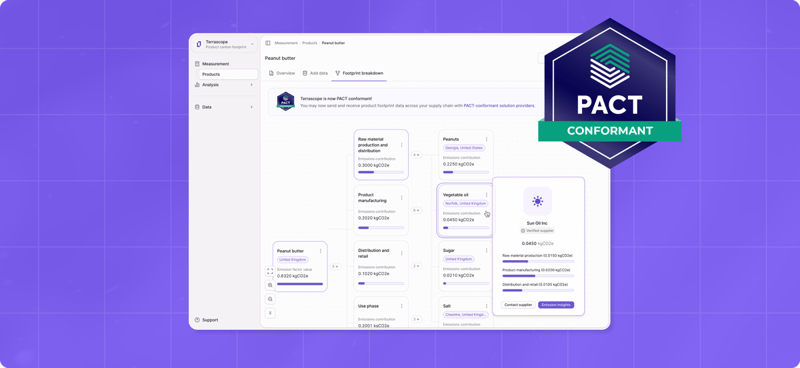
Yes. Terrascope is PACT-conformant, enabling standardised carbon data exchange between companies and their suppliers. This supports interoperability across value chains where multiple platforms are in use.