Skip to content

Raw files in. Cited SGX climate disclosure out.

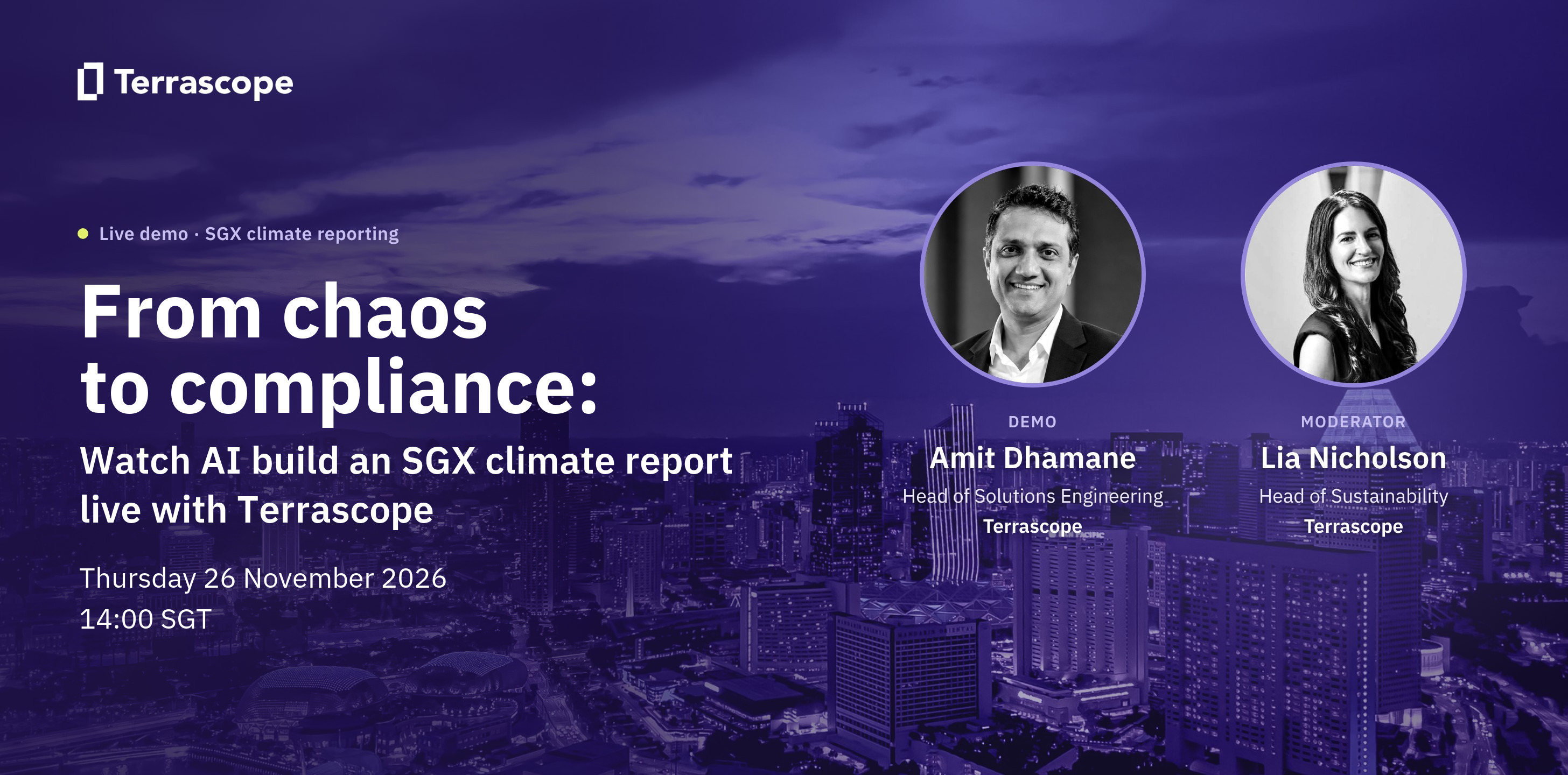
In this live demo, Terrascope's Head of Solutions Engineering shows its AI completing two core tasks: reading raw files to calculate emissions, and drafting the SGX climate disclosure.

Every SGX-listed company now reports its operational and electricity emissions (Scope 1 and 2), and Straits Times Index constituents add value chain emissions from FY2026 (Scope 3).

The business data sits in utility bills, supplier invoices and spreadsheets across sites and systems. The written disclosures draw on board charters, meeting minutes and company policies.

Without automation, the process is time consuming, expensive and painful.

In the demo, every number and every drafted disclosure links back to its source document, so your reviewers and auditors can check it.

What we'll cover in 45 minutes

  • What SGX requires of listed companies, by year, and the challenges teams face

  • Live demo 1: Terrascope's AI reads source files and calculates emissions

  • Live demo 2: Terrascope's AI drafts the SGX disclosure from that footprint and your board documents, citing each source

  • Q&A

Who it's for

  • IT, data and engineering professionals at SGX-listed companies, especially STI constituents, who support AI adoption for specific use cases across the company

  • Sustainability, finance or compliance leads preparing their company's SGX climate report

Join us at 14:00 SGT on Thursday 26 November 2026 to see raw files turn into a cited SGX climate disclosure.

Save your seat

An exclusive, live demo.
14:00 SGT on Thursday 26 November 2026.

Frequently Asked Questions

How does the AI draft a climate disclosure?

You upload documents your company already has, such as board charters, policies, transition plans and last year's report, and map them to sections of the report. For each disclosure, the AI finds the passages in your documents that answer it and drafts a response from those passages only. Each draft shows which of your documents it used, so a reviewer can check it against the source. Scope 1, 2 and 3 figures come straight from the carbon data in your Terrascope platform.

What happens to the documents we upload?

Terrascope extracts the text from your documents and stores it in the same Terrascope database as the rest of your company's data. The AI models are enterprise-grade and accessed through AWS Bedrock. Your data is never used to train these models, and the model providers don't retain it long-term.

How do you stop the AI from making things up?

The AI drafts only from the documents you upload. When your documents hold nothing relevant to a disclosure, the AI leaves it blank and lists it in a status banner, so your team knows which evidence to collect next. Every draft then goes through your own editor, reviewer and manager before it is accepted, and the audit trail records who changed what, and when.

Latest Webinars

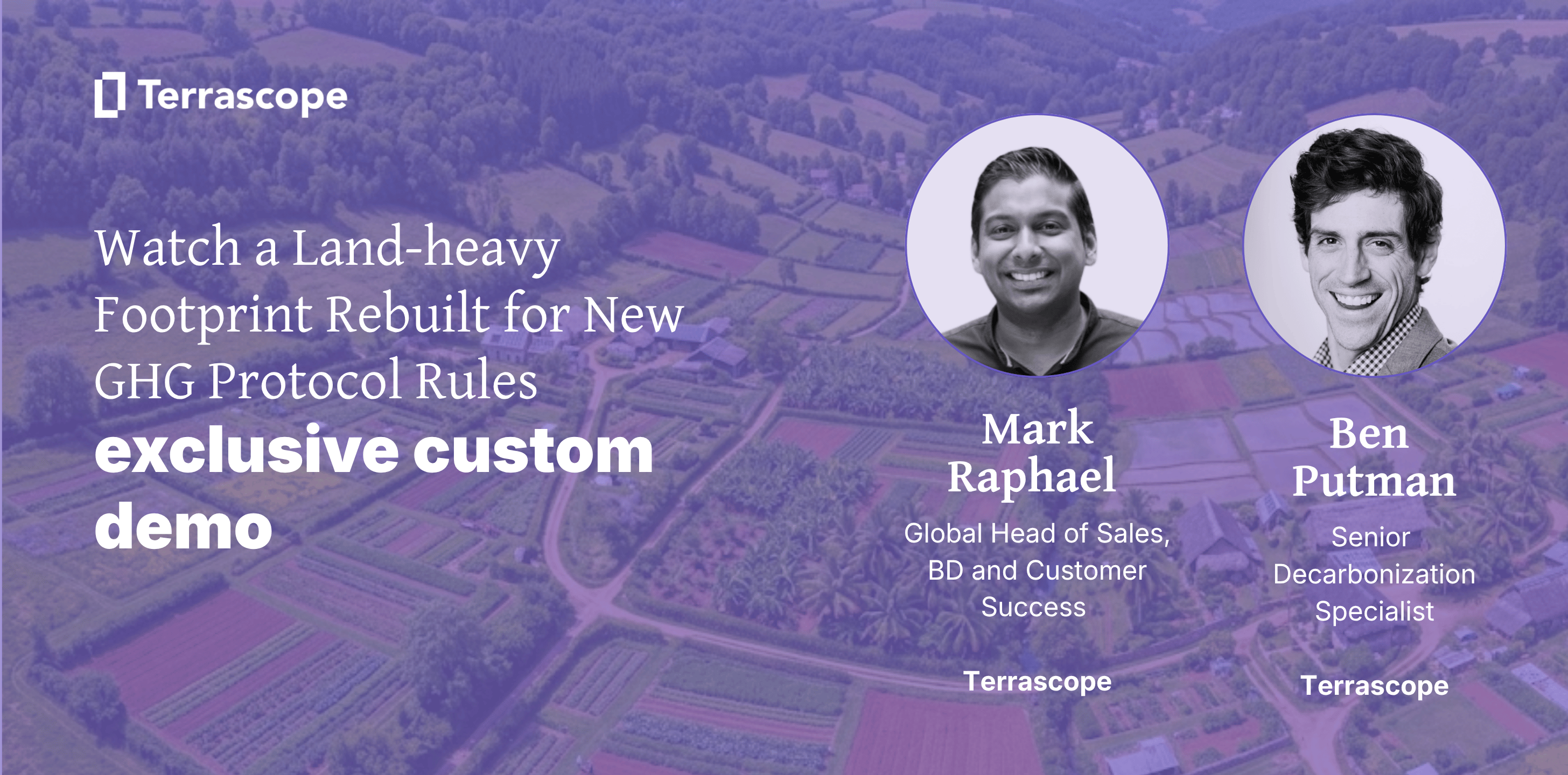
Watch a Land-heavy Footprint Rebuilt for New GHG Protocol Rules: exclusive custom demo
On-demand

Watch a Land-heavy Footprint Rebuilt for New GHG Protocol Rules: exclusive custom demo

Look under the hood at Terrascope's state-of-the-art land emissions and removals capabilities.

October 18, 2026

How a Leading Automotive and Industrial Group Reports Beyond Carbon
On-demand

How a Leading Automotive and Industrial Group Reports Beyond Carbon

Learn how Sime built sustainability reporting owned across the whole business, and scaled data 10x with the same lean team.

August 11, 2026

How to Take Carbon Footprinting In-House (and Why You Should)
On-demand

How to Take Carbon Footprinting In-House (and Why You Should)

Frutura, ecoinvent and Terrascope on building a transparent, audit-ready corporate carbon footprint (Scope 1, 2 and 3) your teams can act o...

July 20, 2026